


Most software has to create PDF documents automatically: an invoice after a sale, a contract when a customer signs up, a certificate when a course ends, a report at the end of each month. Usually, the design of these PDF documents is built into the software itself. So even a small change, like new wording, an updated logo or a corrected address, has to go through the developers and wait for the next software update.
At Tuix, we built Tuix PDF Service to take that job out of the application for good, and it already does exactly that for our own
What Tuix PDF Service does
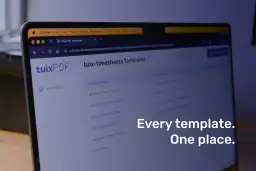
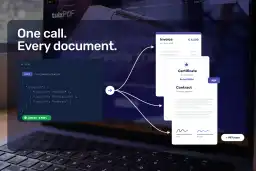
Tuix PDF Service converts your PDF documents into templates that you can manage from your browser. Organize them by application (project), design them with a live preview, and mark the spots where the actual data should go, such as a customer’s or user’s name, a list of items, or an invoice total. From there, your software sends the data with a single call, and the service fills out the template, generates the final PDF, stores it privately, and responds with a link. A single call can generate an entire batch, with logos, signatures, or QR codes included along with the data.
That means:
Design changes stop being releases. Save a template in the browser and the next document already uses it. One template, thousands of documents. The data decides the content, so one design covers every customer and every amount. Several products under one roof. Applications keep the templates of different projects, brands or clients apart within one account. Checked before it is built. Both the design and the data filled into it are checked before the PDF is built, which reduces the margin of error in the documents.
Why it matters for your business
An invoice layout, a contract clause or a certificate design is business content. It belongs to the people responsible for it, and changing it should not depend on the development team's calendar.
Taking PDF documents out of the release cycle changes how quickly a company can respond:
Changes reach customers sooner, because a new logo or clause no longer waits for a release. Development effort is reduced, because the PDF problem is solved once rather than in every product. There is one less system to maintain, because producing, storing and serving files happens in the service.
How we use it
Tuix Timesheets, our product for tracking hours and invoicing, runs every document it produces through the Tuix PDF Service. The timesheet reports, the client invoices and the employee invoices are all templates in the service, filled with the data recorded in Timesheets. Their design is managed in one place, outside the Timesheets code, and every report or invoice can be downloaded again at any time.
Our approach
We built Tuix PDF Service because our own product needed it. Tuix Timesheets had to produce reports and invoices without PDF document code slowing down every release, so we solved that problem once, ran the solution in production, and opened it to other companies after it had proven itself. That is how we develop products at Tuix: we start from a real need, build a focused service that does one job well, give it an editor people enjoy using and an API other systems can plug into, and treat security as part of the feature from day one. The same foundation can be shaped around your PDF documents and the systems you already use.

A dashboard where you organize your documents by application, an editor to design them, and access keys that let your software produce them. You sign up with an email address or a Google account and the first 15 days are free. Every document comes out on A4 pages in portrait format and stays available through the link returned when it was created.
Anyone comfortable with basic web page design, such as a designer or a front end developer, because templates use the same language every website is built from. The preview updates as you type, so the layout is checked without generating a single PDF. Once a template exists, changing a sentence or a logo is a small edit and a save.
It simply continues onto the next one. A long invoice, a multi-page contract or a monthly report flows across as many pages as its content needs, so one template handles a customer with three line items and one with three hundred. The template can also say where a new page must begin, for example to start the terms and conditions or each chapter of a report on a fresh page.
One call. They send which template to use and the values that change, and get back a link to each finished document, and a batch either succeeds completely or returns a clear error, never half the documents. Any system that can call a web address can use it, and the public developer guide, in English and German, has working examples for the most common programming languages.
Very little. A key can produce and download documents, but it can never change your templates or settings, which are only managed from the signed in dashboard. Each key is shown once, can be deleted at any time, and handles up to 50 requests per second, with higher limits available if your volume needs them.
Templates and finished documents are stored privately in the EU, and every request is checked against your account, so an identifier from one company means nothing in another. Document links only open with your key. The data you send fills in the document and is not kept separately, and if your trial ends, the documents you already created remain available for download.


