


Most customer support systems ask people to adapt to them: phone menus, numbered options, contact forms, hold times. It works, but it's rarely a pleasant experience, and for businesses, every minute of waiting translates into frustrated customers and an overloaded support team.
At Tuix, we build software the other way around: we make the technology adapt to the person using it. The Voice AI Agent is one of the clearest examples of that philosophy in action.
What the Voice AI Agent does
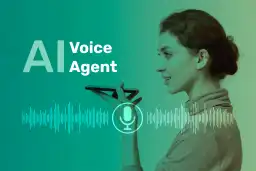
The Voice AI Agent is an AI-powered voice assistant that can be integrated into any customer support service. Instead of forcing the user to navigate menus or wait on hold, the person simply talks naturally, as if speaking with a member of the support team.

That means:
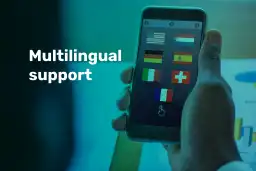
Natural, multilingual conversations. The agent interacts in different languages, adapting to the caller instead of the other way around.
Understanding the problem, not just the words. The agent identifies what the user's request is about, without menus or predefined options.
Automatic ticket generation. Once the case is understood, the agent creates the corresponding ticket for the support team to resolve it, with no manual steps in between.
Simultaneous attention. The agent can hold multiple conversations at the same time, without losing quality or consistency in its responses.
It's not a chatbot bolted onto an existing system, it's a support tool capable of listening, understanding, and acting within the company's support workflow.
Traditional support vs. support with the Voice AI Agent
The difference is immediate: shorter wait times, more consistent answers, and a much smoother experience for the caller, without sacrificing service quality.
Why this matters beyond customer support
The technology behind the Voice AI Agent isn't limited to a single channel. The same conversational engine can be integrated into technical support lines, booking centers, after-sales services, or any other touchpoint where a company receives calls from its users.
For a company's leadership, this translates into concrete outcomes:
Lower operating costs, by reducing the need to expand the human team to sustain call volume.
Around-the-clock availability, without depending on shifts or business hours.
Higher customer satisfaction, thanks to faster, more consistent responses.
Our approach
This project reflects how Tuix approaches software development in general: we don't just deliver a working application, we look for ways to make the experience genuinely simpler for the people who use it every day. The Voice AI Agent is one of our tools, ready to be adapted to your business's own software.

Listen to a customer's inquiry, understand the problem, and automatically generate a support ticket, all from a natural conversation, with no menus or options to memorize.
Yes. The agent is built to understand and respond in multiple languages, which is key for businesses with customers or teams spread across different regions.
Yes. The agent holds multiple conversations simultaneously without losing quality or accuracy in its responses.
The agent automatically generates a ticket with the relevant case information and routes it to the corresponding support team, so the solution can move forward without the customer having to repeat their story.
For those curious about what happens behind a single call, here's the journey a request takes, from the moment someone starts speaking to the moment they get an answer:
The conversation begins. The customer reaches out through a website or a phone call, and the exchange starts streaming instantly, with no noticeable delay. Speech becomes text. What the customer says is transcribed accurately, so nothing gets lost in translation between voice and meaning. The request is understood. The agent analyzes that text to grasp what the customer actually needs, not just the words they used. A response takes shape. The agent puts together an answer that fits the situation, clear and relevant to the request at hand. The agent speaks back. That answer is turned into natural-sounding speech and delivered to the customer, keeping the exchange fluid and human-like.
All of this happens within seconds, whether the customer connects online or by phone, so the experience feels just as smooth and consistent either way.
you something like it